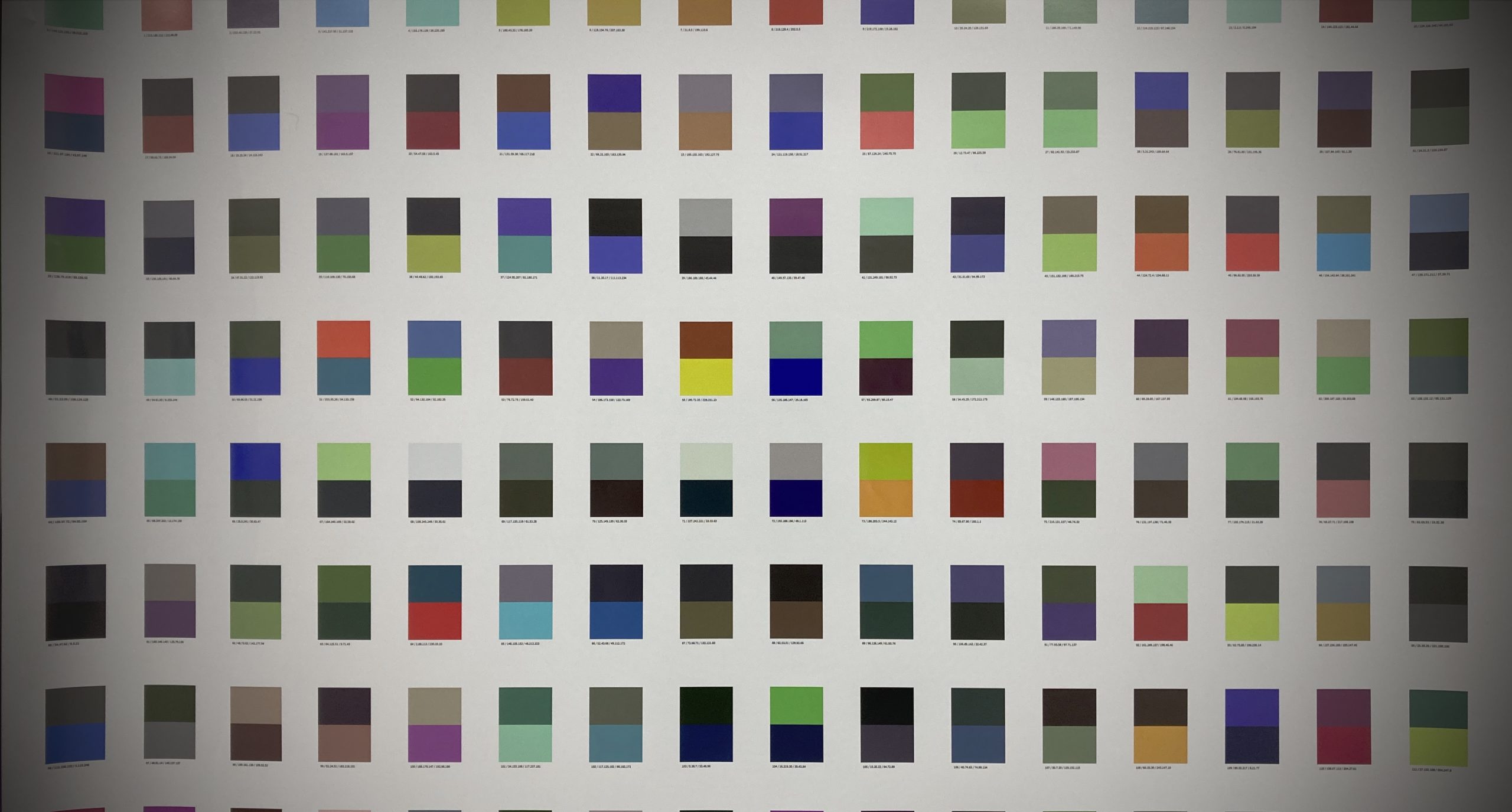
The series Colour Correspondence approaches colour in photography from a synthetic point of view. This means, using a custom machine-learning model, trained to predict from a given colour how to correspond with another colour. The experience is further expanded in the final model to a total of 16 million available colour correspondences.
If creating combinations of colour is the work of careful enquiring and selection whether combinations are monochromatic, complementary, triadic, etcetera, in this series I delegated part of the image creation process, namely the colour generation, to the machine-learning model.
The series Colour Correspondence approaches colour in photography from a synthetic point of view. This means, using a custom machine-learning model, trained to predict from a given colour how to correspond with another colour. The experience is further expanded in the final model to a total of 16 million available colour correspondences.
If creating combinations of colour is the work of careful enquiring and selection whether combinations are monochromatic, complementary, triadic, etcetera, in this series I delegated part of the image creation process, namely the colour generation, to the machine-learning model. Making the machine-learning model a light source in the colour darkroom allowed to record the colour pairings in photo-sensitive paper.
This approach bridges digital input and analogue image creation in the colour darkroom while transposing what is mostly relegated to be seen is screens, to become light and finally resulting in chromogenic images.